Why rare residential space creates its own category.
Pirita apartments are not a typical product on the Tallinn real estate market. Here, people do not buy four walls and floor area – they choose a lifestyle that begins when stepping out the door and continues all the way to the sea. Space, quiet, privacy and proximity to nature are not sales arguments here, but everyday reality, which is why Pirita has for years been the most sought-after residential district in Tallinn.
Pirita as a lifestyle: an identity that cannot be sold
Pirita holds a unique position in Tallinn. It is not simply a district – it is a world of its own, with its own rhythm, its own aesthetic and its own people. Pirita is a location that is chosen not because it is convenient, but because it corresponds to a particular outlook on life.
Historically, Pirita has been home to Tallinn’s wealthier residents – a place where people lived in smaller houses and summer homes already during the Soviet period, when privacy itself was a rare value. After Estonia regained independence, Pirita gradually developed into Tallinn’s most prestigious residential district, where new developments blend with an established living environment. This history matters: Pirita’s reputation was not created by marketing, but by decades of choices.
The Pirita community is discreet by nature. Success is not displayed here – it is lived. Neighbours are people who have consciously decided that their living environment is worth the investment, and that shared value system creates its own distinctive social environment.
Pirita’s identity is also shaped by its geography. A characteristic of the district is that when arriving from the city, the tempo changes first, then the views, and finally the energy. It is the only district in Tallinn where a seaside promenade, pine forest and proximity to the city centre coexist simultaneously.
A seaside Pirita apartment: value that cannot be measured in square meters
In the Tallinn context, Pirita offers something irreplaceable: openness. In most districts of Tallinn, courtyards face other courtyards and windows face neighbouring apartments. In Pirita, there are views, breathing space and a sense that living is somehow freer.
Pirita beach and the river mouth fundamentally shape the character of the area. A morning walk to the beach is not a special event here – it is part of an ordinary day. The surroundings of the Pirita River, protected natural landscapes and Maarjamäe Park create a green network that begins at your doorstep and, if you follow it long enough, eventually leads into the forest.
This proximity to nature is not merely aesthetic – it is psychologically important. Studies consistently show that access to natural environments directly affects stress levels, sleep quality and overall well-being. People who live near the sea and forest often realize the value of it only when they have to give it up.
The location of Masti Street on the seaside of Pirita Road means that the sea is not an abstract geographical fact, but a daily experience. Morning light, the direction of evening winds, the changing of seasons – all of it becomes a natural part of living.
Within this segment is also the property we are offering at Masti 3 – a 253 m² five-room Pirita apartment on the seaside of the road, priced at 4,545 €/m² with a total price of 1.15 million euros. With residential space of this kind, the question is no longer simply “how much does it cost?” – the question becomes “what kind of life does it enable?”
Infrastructure and services: a district that supports a demanding lifestyle
A common misconception is that a private and peaceful living environment inevitably requires compromises in accessibility of services. Pirita disproves this myth.
Sports and active living. Pirita has the highest density of sports infrastructure per resident in Tallinn – the Pirita Aquatic Centre, rowing canal, equestrian centre, running and cycling paths, tennis courts and golf towards Viimsi. Most of these are within walking distance.
Education. Pirita is one of the preferred districts for families who value educational quality. Pirita Majandusgümnaasium, Maarjamäe School and several private educational institutions are well represented in the area. International schools are accessible within a reasonable driving time.
Dining and everyday life. Pirita centre, the seaside restaurant area and the surroundings of the Song Festival Grounds provide the infrastructure necessary both for everyday grocery shopping and high-quality dining experiences. The immediate surroundings have gradually evolved: local cafés, bakeries and specialized shops have replaced the earlier gaps.
Connection with the city centre. Pirita is one of the best-connected districts of Tallinn. Pirita Road is one of the city’s main arteries and allows access to the centre in 10–15 minutes under normal conditions. This means that a Pirita resident does not have to choose between a peaceful environment and city life – both are available.
Pirita vs. the city centre: why quality of life outweighs geographic centrality
In Tallinn, there are two main philosophies among real estate buyers: proximity to the city centre and lifestyle privacy. These are not mutually exclusive, but their priority reveals much about how people value their time and space.
The city centre – Kalamaja, Põhja-Tallinn, Old Town and its surroundings – offers vibrant city life, concentration of restaurants and culture, and a walkable lifestyle. The price of that is density. Most central apartments share walls on multiple sides, windows face courtyards or streets, parking is a chronic issue and noise is part of everyday life.
Pirita represents a choice in favour of a different kind of well-being. The morning routine begins without traffic. Children grow up in an environment where there is space to move. Home becomes a place one returns to – not a place one escapes from.
In the context of apartments over 200 m², the distinction becomes even clearer. Larger apartments in the city centre – already scarce on the market – often carry a high price tag without additional lifestyle value. A large Pirita apartment offers space, nature and privacy with the same investment.
It is also important that Pirita prices reflect not only current market value, but also the district’s long-term attractiveness and stability. That is an argument with significance from an investment perspective as well.
Pirita apartment market 2025–2026: what transaction data shows
According to data from the Estonian Land and Spatial Board, a total of 83 apartment transactions were completed in the Pirita district between January 2025 and March 2026, with a total transaction volume of 27.5 million euros. The average size of Pirita apartments was 77.8 m², the average price was 4,181 €/m², the median price 3,932 €/m², and the highest recorded price reached 8,626 €/m².
By subdistricts, the price structure is clearly differentiated.
Maarjamäe subdistrict – 22 transactions, average area 64.8 m², average price 2,695 €/m², total volume 3.79 million euros. This represents the more accessible segment of the Pirita market, suitable for buyers who want to enter the district at the best price point.
Merivälja subdistrict – 12 transactions, apartments averaging 90.4 m² with a price level of 2,998 €/m². A quieter and more dispersed residential environment, where the compromise between spaciousness and distance from the centre becomes evident.
Pirita subdistrict – the clear top tier of the market: 49 transactions, total volume over 20 million euros, average price 5,138 €/m², median price 5,167 €/m². This is where seaside apartments and newer developments are located. Prices fluctuate widely and exceed 8,600 €/m² – reflecting both location and the specific characteristics of each property.
What the Pirita apartment market offers today – and what it does not
In the Pirita subdistrict there are currently approximately 106 apartments on the market. Prices peak at up to 9,238 €/m² – for a furnished 129.9 m² four-room apartment priced at 1,200,000 euros, including two parking spaces and a storage unit. Other apartments in the same development range between 6,200–7,695 €/m².
In the immediate vicinity of Masti Street there are 16 properties for sale. Neighbouring new-development apartments offer 4–5-room homes sized 103–134.2 m², priced at 5,300–5,500 €/m², with total prices between 572,825 and 745,883 euros.
However, when it comes to size, the picture is different: in comparison to the penthouse at Masti 3, the next largest available option is approximately 100 m² smaller. This is no longer a variation within the same segment – it is effectively a category of its own.
Privacy and exclusivity: the value of rare supply
Pirita has a structural characteristic that transaction data consistently confirms: apartments over 200 m² are rare. New developments follow market expectations and focus on medium-sized units that are easier to sell and finance. The segment of large homes inevitably remains limited – and often such properties never even reach public listings.
This creates a situation where a buyer looking for a Pirita apartment cannot simply compare “the best offers on the market” – they must be present when the right property appears.
Privacy at Masti 3 operates on multiple levels. The apartment shares only one wall with neighbours. Windows open in multiple directions, offering views that do not mean looking into someone else’s home. The smaller scale of the building means entrances, corridors and common spaces are not anonymous mass-project environments, but spaces with a human scale.
Exclusivity here is not only a matter of price or size. It comes from the fact that this combination – 253 m², proximity to the sea, a complete interior, Pirita subdistrict – is simply not currently available elsewhere on the market.
Aesthetics and design: a thoughtfully designed interior as a time-saving asset
When searching for a new home, one decision affects the next five to ten years of quality of life more than it may initially seem: whether the home is finished or still requires work.
Most secondary-market homes – even those in good condition – require compromises. Somewhere there are floors that should be updated. A bathroom that is functional but not quite right. A kitchen that works but could be different. Each such detail becomes a postponed decision that consumes time and resources and leaves the home feeling unfinished.
Masti 3 is designed as a coherent whole. Furniture, appliances, lighting and interior design have been conceived together so that everyday life flows naturally. This is not only about visual harmony – it means the home is ready for living immediately, without needing to decide on colours, materials or equipment.
The value of such a home becomes evident daily: in the morning in a kitchen designed for use; in the evening in a living room where light and proportions are precisely balanced; with guests who sense, even before they articulate it, that the home was designed for living rather than simply furnished.
Time is a resource that cannot be repurchased later. A finished home is an investment in that resource.
Investment and asset preservation: why a Pirita apartment retains value
In the context of real estate investment, Pirita is one of Tallinn’s most stable districts. This results from several structural reasons.
Limited supply. Pirita is geographically constrained – the sea on one side and protected natural areas on the other. The addition of new residential land is significantly more limited than in many other districts. This means supply will never expand beyond what demand allows.
Stable demand. Buyers who look for Pirita have usually already determined what they want from a living environment. It is not an impulse purchase or compromise – it is a considered long-term decision. Such a relationship with a place of residence does not break with the first price correction, which stabilizes transaction volumes even during more complex market conditions.
Demand for rare offerings. Apartments over 200 m² are rare in Pirita today and likely to remain rare ten years from now – new developments are not oriented toward this segment. This means that the future seller of such a home will face a situation similar to the current buyer: limited competition.
Absolute price position. 4,545 €/m² is below the median price in the Pirita subdistrict (5,167 €/m²) – meaning the price level of the property is moderate within the district context rather than inflated. A rare property priced moderately is attractive from a portfolio perspective.
Masti 3 – a spacious and fully finished penthouse.
When comparing Pirita transaction data, current supply and the parameters of this property side by side, the conclusion is clear: Masti 3 represents a segment that currently has no direct comparison on the market.
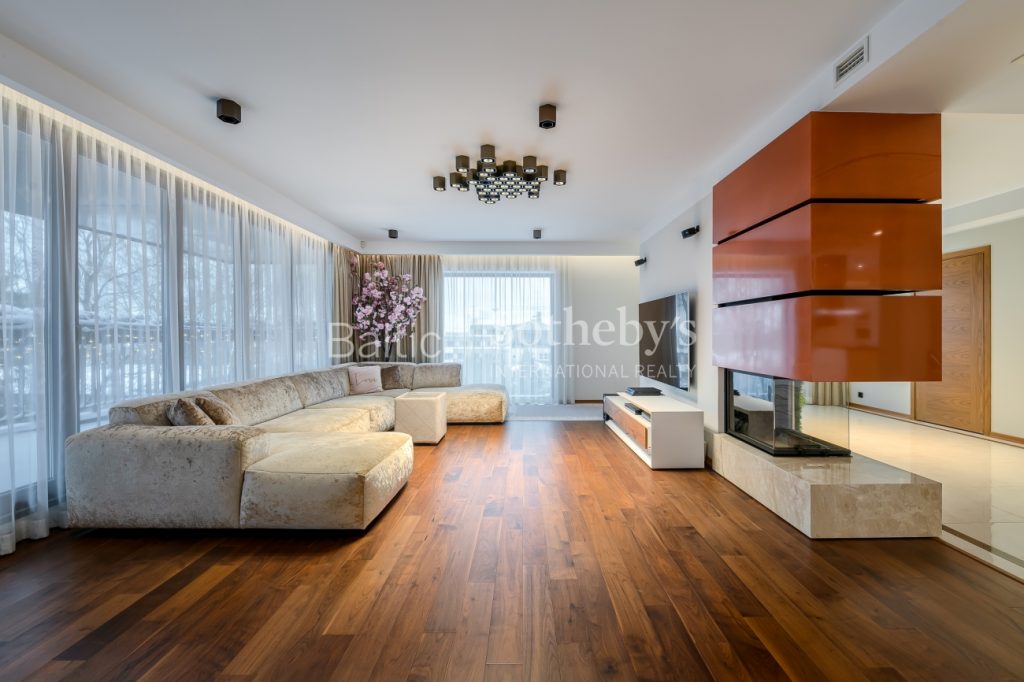
253 m² of living space in the Pirita subdistrict, close to the sea, with a fully designed interior and priced below the district median – this is a combination that does not appear frequently on the market. Large apartments in Pirita are rare, and when they do appear, they often sell before reaching public listing.
This is a home where everyday life unfolds naturally – without the environment standing in the way. Space, quiet, proximity to nature, thoughtful aesthetics and the long-term stability of the district form a combination rarely found in the Pirita market.
See more information and photos – Masti 3, 4 bedrooms top-floor apartment in Pirita.
Rauni Tillisoo
rauni.tillisoo@balsir.com
Mobile: +372 5323 2294
Sales Associate
Baltic Sotheby’s International Realty
| Office: +372 644 3446